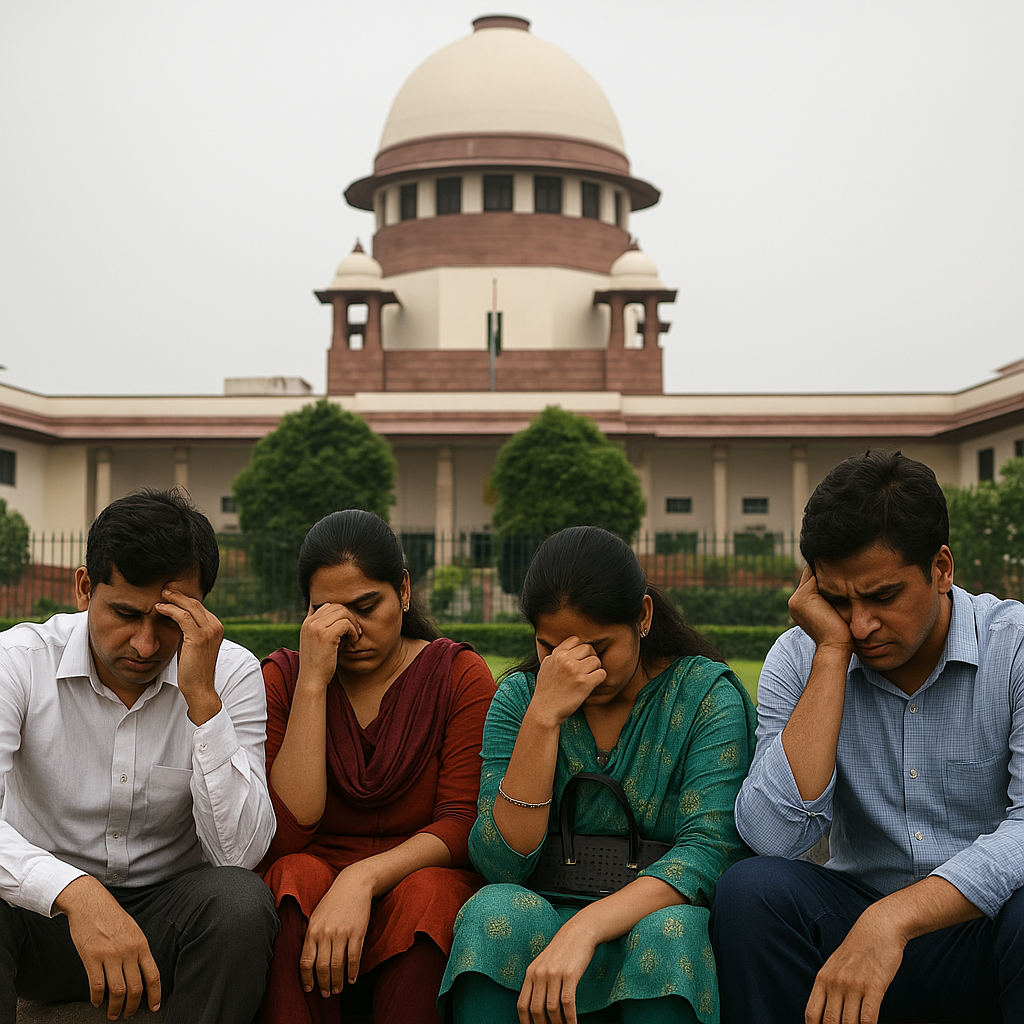
“Supreme Court Verdict on SSC Case: A Turning Point for Teachers’ Futures”
The Supreme Court of India recently delivered an important judgment concerning the West Bengal School Service Commission (WBSSC) recruitment case, which had been a subject of controversy due to allegations of corruption and manipulation in the recruitment process. This judgment focuses on the appointments made for teaching and non-teaching staff in the state of West Bengal, particularly those made in 2016.
Background of the Case
In 2016, the WBSSC conducted a recruitment drive for the appointment of teachers and non-teaching staff across various schools in West Bengal. However, following several allegations and an inquiry, it was revealed that the recruitment process was marred by significant irregularities. The Calcutta High Court took up the matter and found that a large number of appointments had been made through fraudulent means, including manipulated OMR sheets. Based on this, the High Court annulled these appointments and directed that the affected individuals should return their salaries along with interest and ordered fresh recruitment to be conducted.
The Supreme Court’s Intervention
The West Bengal government appealed to the Supreme Court against the Calcutta High Court’s decision, arguing that annulling all the appointments would severely impact the state’s education system, which was already struggling with a shortage of teachers. The Supreme Court examined the case and, while recognizing the serious nature of the fraud, decided that not all appointments could be treated the same. The Court ruled that efforts should be made to segregate those appointments that were made fraudulently from those that were legitimate.
This ruling effectively allowed the continuation of employment for individuals who had been appointed fairly, while directing the government to take appropriate steps against those who were involved in the fraudulent recruitment process.
Key Directives by the Supreme Court
- Segregating Tainted and Untainted Appointments: The Court directed that the authorities should differentiate between fraudulent appointments and those made in a legitimate manner. This process would help in retaining those who were wrongly implicated in the fraudulent process but had been appointed fairly.
- Refund of Salaries: For those who were found to have been appointed through fraudulent means, the Court ruled that they must return the salaries and other benefits they had received since their appointments. This measure was aimed at ensuring that those who gained positions unfairly did not benefit from the corrupt practices.
- Investigation by the CBI: The Supreme Court allowed the Central Bureau of Investigation (CBI) to continue its probe into the matter, particularly focusing on officials who were involved in the approval of appointments beyond the authorized list. The investigation would look into whether there was any deliberate manipulation of the recruitment process, especially concerning the appointment of supernumerary posts. However, the Court made it clear that no coercive action should be taken during the investigation, which means no arrests or forceful actions were to be carried out until the investigation was complete.
- Data Management Issues: A significant concern raised by the Court was the mishandling of crucial data by the WBSSC, especially the scanned images of OMR sheets. The Court pointed out that the Commission’s failure to maintain proper records had made it difficult to verify the legitimacy of the appointments. This lapse in data management complicated the process of distinguishing between legitimate and fraudulent appointees.
Conclusion
The Supreme Court’s decision in the West Bengal SSC case underscores the delicate balance between addressing corruption and ensuring justice for individuals who may have been wrongly implicated. By focusing on segregating tainted from untainted appointments and allowing investigations to proceed without undue pressure on individuals, the Court aimed to protect public interest while also providing a fair and just remedy. This ruling also serves as a warning to public authorities about the importance of proper record-keeping and transparency in recruitment processes, which are essential to maintaining public trust and ensuring fairness.
The outcome of this case will likely have far-reaching implications for recruitment procedures in public institutions across India, highlighting the need for stricter protocols to prevent corruption and ensure that all appointments are made based on merit and integrity.
