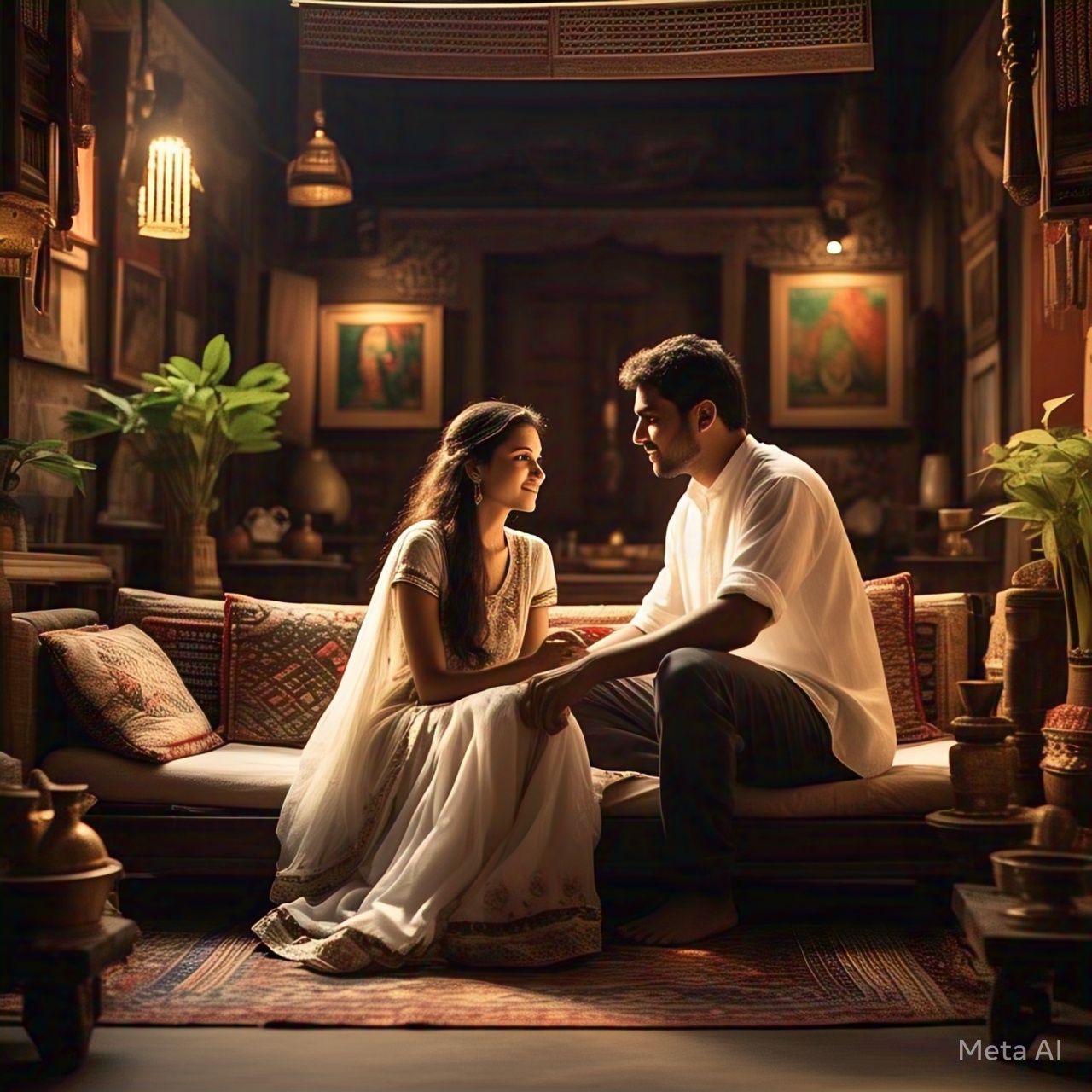
LIVE-IN RELATIONSHIPS IN INDIA : LEGAL PERSPECTIVES AND SOCIAL REALITIES
This Article has been written by Mudita Ahuja, a second year student of GGSIP university.
INTRODUCTION
Social transformation forms the essence of progressive societies. New patterns of family formation have emerged. The concept of live-in relationship has existed since the Vedic period in India. The concept has no legal definition. However, a “live-in relationship” is a living arrangement in which an unmarried couple lives together for a long period that resembles a marriage. The expression “relationship in the nature of marriage” is included in the definition of “domestic relationship” however, it has not been clearly defined. It is stated in the Protection of Women from Domestic Violence Act (PWDVA) as follows – Section 2(f) “Domestic relationship means a relationship between two persons who live or have, at any point of time, lived together in a shared household, when they are related by consanguinity, marriage, or through a relationship in the nature of marriage, adoption or are family members living together as a joint family. In Velusamy v. D. Patchaiammal, the Supreme Court has held that ‘relations in the nature of marriage’ resemble common-law marriage. To obtain the benefit of this section, the following conditions must be fulfilled – (a) A couple must be of legal age to marry and qualified to enter into marital union. (b) They must represent themselves as spouses to the society. (c) Cohabitation between the couple must be voluntary and for a specified period. Currently, marriage as a lifelong social bond is being questioned in India. There is a rising tendency to enter into a ‘live-in relationship’ instead of marriage, leading to conjugal disloyalty and disquiet.
HISTORY OF LIVE-IN RELATIONSHIPS
Although marriage is a sacred union but this institution is also in a phase of transition. However, history books reveal the existence of live-in, proving it is an ancient concept. The Vedas provide eight kinds of marriage, of which the Gandharva form of marriage resembles the present-day live-in relationship. In Gandharva marriage, men and women gave their consent mutually for marriage. Solemnization of this form of marriage required neither the consent of the family nor the performance of any particular ritual. Gandharva marriage was just a commitment by word of mouth, still, it contained all the rights and obligations vested in a normal marriage.
REASONS FOR THE INCREASE IN LIVE-IN RELATIONSHIPS
Today, both divorce cases and live-in relationships are increasing and there is a significant connection between the two. Today, a significant percentage of youth prefer live-in. There are multiple reasons for the same. Most importantly, live-in provides a couple to test their compatibility. Divorce cases are soaring at an alarming rate nowadays and the biggest factor observed for marital separation is incompatibility. The phenomena of live-in relationships are enabling couples to test their compatibility with each other before adopting any formal relationship. Live-in provides freedom and flexibility to choose one’s mate. It carries no social pressures or familial interventions in it. Cohabitation promotes deeper bonding between the couple as folks get the chance to choose their mode of life on their own accord. It also helps individuals to decide whether they should go for a marital union or not. Marriage implies traditionalism and bondage, and often women reluctantly give up their careers for the sake of family, which does not fit the present-day modern age of women empowerment.
SOCIAL REALITIES OF LIVE-IN RELATIONSHIPS
Live-in relationships in India represent a complex and evolving aspect of India’s social fabric, reflecting a growing tension between deeply rooted traditional values and the modern aspirations of a younger, more urbanized generation. While the Supreme Court has legally recognized live-in relationships under the ambit of personal liberty and cohabitation rights, societal acceptance remains limited, particularly in smaller towns and rural areas where cultural norms and familial expectations hold significant importance. Indian society has long placed a premium on marriage as a sacred institution, often viewing it as the cornerstone of social stability and moral conduct. In this context, live-in relationships are seen by many as a challenge to conventional ideals, raising questions about morality, commitment, and familial honor.
However, in urban areas and among progressive circles, this concept is gradually gaining acceptance, driven by factors such as globalization, exposure to diverse cultures, and a shift in priorities among younger generations. Many individuals view live-in relationships as a way to test compatibility, share responsibilities, and explore personal freedoms without the immediate pressures of marriage. Despite this slow progress, couples in live-in arrangements often face significant challenges, including societal stigma, judgment from neighbors and family members, and legal ambiguities, particularly concerning property rights, inheritance, and the custody of children.
Moreover, women in live-in relationships are particularly vulnerable to societal rejection and moral policing, reflecting the persistent gender biases that influence public discourse. Such relationships are frequently misjudged as casual or devoid of commitment, ignoring the genuine emotional and practical dimensions that many couples invest in these arrangements. This highlights the need for a broader dialogue about changing social norms, individual rights, and the evolving definition of relationships in a rapidly modernizing India. While live-in relationships signify a shift towards personal choice and freedom, they also underscore the deep cultural divides that continue to shape the way Indians perceive relationships and family structures.
LEGAL PERSPECTIVES OF LIVE-IN RELATIONSHIPS
Where a man and a woman live together for a long period as husband and wife, there would be a ‘presumption of marriage‘ u/S.114 of the Indian Evidence Act, 1872. In A. Dinohamy v. W.L.Blahamy, the Privy Council took the stand that, “where it has been proved that a man and a woman have lived together as husband and wife, the law will presume that they have been living together in consequence of a valid marriage, and not due to being in a state of concubinage, unless the contrary be proved.” The same stand was also resorted to in the case of Mohabbat Ali versus Md. Ibrahim Khan when the Privy Council stuck to their position that when a man and a woman cohabitated continuously for several years, the law presumes them to be a married couple and not in a state of concubinage.
Before 2000, no courts in the country ever mentioned ‘live-in-relationship’. In 2001 Payal Sharma vs. Superintendent, Nari Niketan, Agra, C.M. Hab. Corp., the Bench consisting of Justice M.Katju and Justice R.B. Mishra of Allahabad High Court observed that “A man and a woman can live together even without getting married, if they wish to. This may be regarded as immoral by society but it is not illegal in the eyes of the law. There is a difference between Law and Morality.”
In Patel and others’ Case, the Supreme Court observed that “the two adults are not criminal offenders who are bound in ‘live-in relationship’ without a formal marriage. No legislation has ever been enacted by the Indian Parliament which denounces any ‘relationship’ as illegal.” The Supreme Court applied the above judgment to Tulsa v. Durghatiya, and recognised the rule that “there would be a presumption of marriage u/S.114 when there has been long cohabitation between a man and a woman.”
On 28 April 2010, a Special Bench of the Supreme Court of India consisting of K.G. Balakrishnan, Deepak Verma, and B.S. Chauhan in Khushboo vs Kanniammal & Anr., raised a question “If two people, a man, and a woman want to live together, who can oppose them? What offense is being committed by them here?” The S.C. held that a ‘live-in-relationship’ is permissible. The court also held that living together is a part of the right to life u/Art.21 of the Indian Constitution and it is not a “criminal offense”.
In the latter part of 2010, the Delhi High Court decided a case Alok Kumar vs. State, which also was in connection with ‘live-in-Relationship’. The facts of the case suggest that the complainant started ‘a live-in-Relationship’ with the petitioner, who had not even divorced his previous wife and was having a child of his own. The complainant was also having a child of her own. The Delhi High Court, therefore, described the nature of such a relationship as a walk-in and walk-out relationship with no legal strings attached. “It is a contract of living together which is renewed by the parties every day and it can be terminated by either of the parties without the consent of the other party.” Thus people who choose to be in a ‘live-in relationship, cannot complain of immorality or infidelity later.
On 31 March 2011 a special Bench of the Supreme Court of India consisting of G.S. Singhvi and Asok Kumar Ganguly in the case of Revanasiddappa & Anr. vs Mallikarjun & Ors., remarked that “irrespective of the nature of the relationship between parents, the birth of a child out of such relationship has to be viewed independently of the relationship of the parents. It is as clear as sunshine that a child born out of such a relationship is innocent and is entitled to all the rights and privileges that are available to children born out of valid marriages.”
In Virendra Chanmuniya vs.Chanmuniya Kumar Singh Kushwaha and Anr., S.C. held that “women in live-in relationships are equally entitled to all the reliefs that are available to a legally married wife.”
CONCLUSION
Hon‘ble Justice A.K.Ganguly & G.S. Singhvi in Revanasiddappa & other vs Mallikarjun & others, that“Law takes its own time to articulate such social changes through a process of amendment. That is why law cannot afford to remain static in a dynamic society. If one looks at the history of the development of Hindu Law, it will be clear that it was never static and has changed from time to time to meet the challenges of the evolving social patterns during different times.”
Live-in relationships in India reflect the changing dynamics of love, companionship, and personal choices in a society rooted in tradition. While the courts have made efforts to protect the rights of individuals in such relationships, the absence of clear laws often leaves couples facing uncertainty and stigma. In cities, live-in relationships are becoming more accepted, but in rural areas and conservative communities, they are still seen as taboo. This divide shows the struggle between modern lifestyles and traditional values in the country. To move forward, we need better laws and greater awareness to protect couples from exploitation and judgment. By fostering understanding and creating a supportive legal framework, India can ensure that live-in relationships are respected as a valid choice. This is not just about laws, it’s about embracing change while respecting the diversity of thought that makes India unique.
